

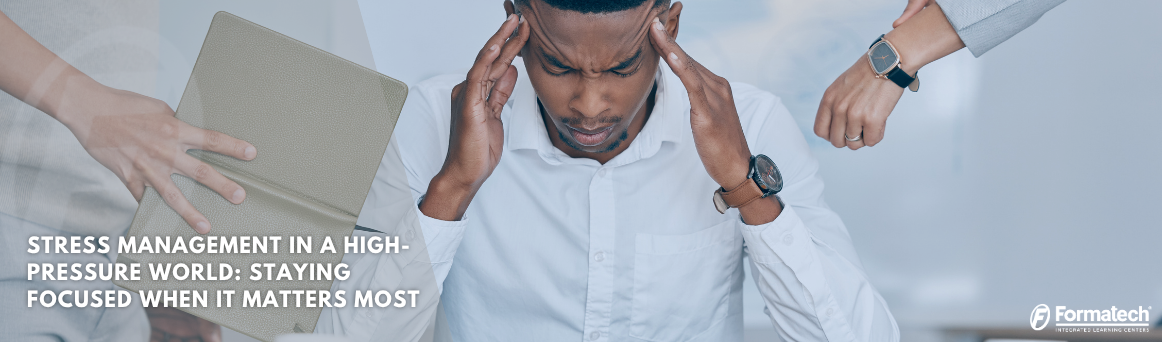
Stress Management in a High-Pressure World: Staying Focused When It Matters Most
During these challenging times, it is more important than ever to prioritize mental health and actively work on managing stress. With everything happening around us, both personally and professionally, pressure can build quickly and affect not only our well-being but also our ability to perform and stay focused.
In today’s fast-paced professional environment, stress has become part of the daily routine. Tight deadlines, constant notifications, and increasing expectations can quickly turn pressure into burnout if not managed properly.
The challenge is not eliminating stress completely. It is learning how to manage it in a way that keeps you productive, focused, and mentally resilient.
Understanding Stress Before It Takes Over
Stress often builds gradually. What starts as a busy day can turn into long-term fatigue, reduced concentration, and decreased performance.
Common signs of unmanaged stress include
• Difficulty staying focused on tasks
• Increased irritability or frustration
• Mental fatigue even after rest
• Declining productivity despite longer working hours
Recognizing these early signals is the first step toward regaining control.
Why Stress Management Is a Professional Skill
Managing stress is no longer just about personal well-being. It is a core professional skill that directly impacts performance, decision-making, and communication.
Professionals who manage stress effectively are better able to
• Stay clear-headed under pressure
• Make better and faster decisions
• Maintain consistent performance
• Communicate more effectively with teams and clients
In contrast, unmanaged stress often leads to mistakes, missed opportunities, and burnout.
Practical Ways To Manage Stress Daily
Stress management does not require drastic changes. Small, consistent habits can make a significant difference.
• Prioritize tasks based on impact, not urgency alone
• Break large tasks into smaller, manageable steps
• Set clear boundaries between work and personal time
• Take short breaks to reset focus throughout the day
• Limit constant notifications and digital distractions
These simple practices help maintain energy levels and improve overall productivity.
Building Long-Term Resilience
Beyond daily habits, long-term stress management is about building resilience. This means developing the ability to adapt, recover, and stay balanced even during challenging periods.
This includes
• Maintaining a healthy work routine
• Developing strong time management skills
• Staying physically active and mentally engaged
• Continuously learning how to handle pressure more effectively
Resilience allows professionals not only to cope with stress but to perform at their best despite it.
Supporting Children Through Stressful Times
The challenges we are currently facing, including the impact of ongoing wars alongside daily stress, are not only affecting adults but also deeply impacting children. Exposure to uncertainty, fear, and sudden changes in routine can lead to emotional distress and even trauma, often showing up through anxiety, difficulty concentrating, or changes in behavior.
Parents play a critical role in helping children cope with these experiences. Open communication, reassurance, and maintaining a sense of stability at home can make a significant difference. Just as importantly, parents should take the time to educate themselves on stress, trauma, and emotional well-being so they can better understand what their children are going through and respond in a supportive and informed way. Formatech is here to help with the Children trauma and trauma management Workshop.
By building awareness and creating a safe environment, parents can help their children process these challenges and develop resilience from an early age.
In a world where pressure is constant, managing stress is not optional. It is essential for sustained success, better performance, and overall well-being.